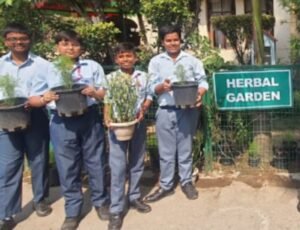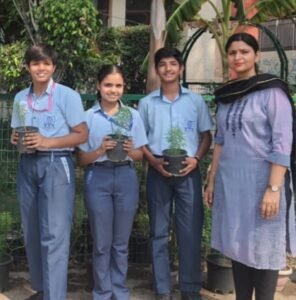

GREEN INITIATIVE
GYAN MANDIR PUBLIC SCHOOL
E-Block, Naraina Vihar, New Delhi 110028
Eco Club Initiatives for Environmental Sustainability-Session 2026 – 2027
Gyan Mandir Public School is committed to fostering environmental stewardship and sustainable living through its dynamic Eco Club initiatives. A wide range of experiential and art-integrated activities were organised on water conservation, plantation and biodiversity, waste management, recycling and reuse, pollution control, climate change, plastic reduction, wetland conservation, sustainable gardening and clean energy. Students actively engaged in meaningful hands-on activities such as nurturing plants, preparing seed balls, maintaining the herbal garden, composting, recycling waste, creating awareness posters and infographics, and exploring renewable energy and wetland conservation.
These initiatives transformed environmental learning into purposeful action, enabling students to develop eco-conscious habits, creativity, critical thinking, teamwork and problem-solving skills.
Learning Objectives
- To cultivate environmental awareness, responsibility and sustainable values.
- To promote conservation of water, energy, soil and biodiversity.
- To encourage the principles of Reduce, Reuse and Recycle.
- To develop creativity, teamwork, critical thinking and problem-solving through experiential learning.

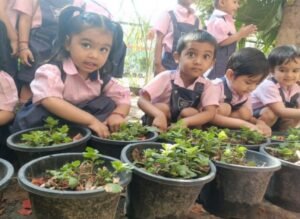

Eco Club Initiatives for Environmental Sustainability-SESSION 2025-26
Gyan Mandir Public School is committed to nurturing environmentally conscious, responsible and proactive citizens through its Eco Club initiatives. Throughout the session, the school organised a diverse range of experiential, activity-based and art-integrated programmes aimed at fostering awareness about environmental conservation and sustainable living.The initiatives covered key environmental themes including water conservation, plantation and biodiversity, waste management, recycling and reuse, pollution control, climate change, reduction of plastic consumption, wetland conservation, sustainable gardening and clean energy. Students actively participated in hands-on activities such as caring for and watering plants, preparing seed balls, maintaining the herbal garden, composting biodegradable waste, creating awareness posters and infographics, recycling discarded materials, and exploring the significance of wetlands and renewable sources of energy.
Learning Objectives
- To develop a strong sense of environmental awareness, responsibility and stewardship among students.
- To enable students to understand the importance of conserving natural resources, including water, soil, biodiversity and energy.
- To promote sustainable practices related to waste reduction, recycling, reuse, composting and responsible plastic consumption.
- To sensitise students towards major environmental concerns such as pollution, climate change, biodiversity loss and wetland degradation.


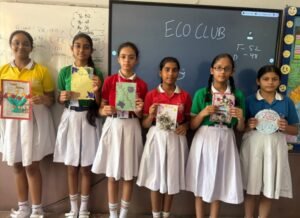
Eco Club Initiatives for Environmental Sustainability-Session 2024 – 2025
Gyan Mandir Public School actively promotes environmental awareness and sustainable practices through its Eco Club initiatives. The school undertook a range of experiential and art-integrated activities focusing on water conservation, plantation and biodiversity, waste management, recycling and reuse, pollution control, climate change, reduction of plastic use, conservation of wetlands, sustainable gardening, and clean energy. Through campaigns, creative presentations, posters, infographics, mind maps and hands-on activities, students developed environmental responsibility, teamwork, critical thinking, creativity and practical skills. The initiatives also encouraged sustainable habits such as saving water, reducing plastic waste, recycling, composting, conserving biodiversity, using public transport and promoting cleaner sources of energy.
Learning Objectives
- To develop awareness about environmental conservation and sustainable living practices.
- To understand the importance of conserving natural resources such as water, soil, biodiversity and energy.
- To encourage responsible practices related to waste management, recycling, reuse and reduction of plastic.
- To foster critical thinking, creativity, teamwork and active participation in addressing environmental challenges.